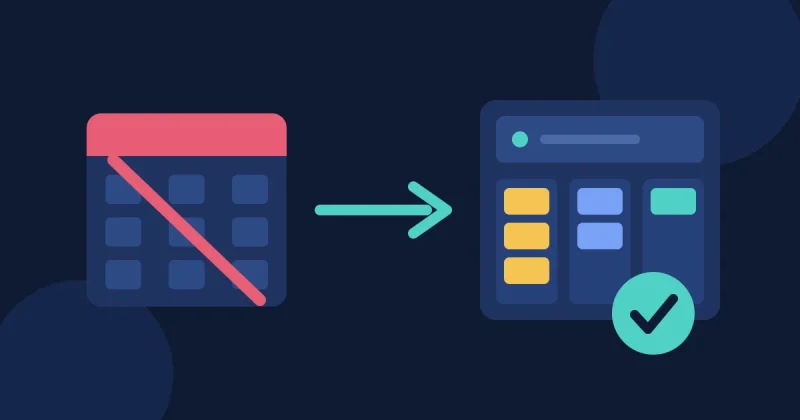
For any small business aspiring to grow, lead generation isn’t just a task; it’s the lifeblood of future success. But in a world brimming with digital tools and complex strategies, how do you choose the right path? Should you piece together a solution from various individual tools, or invest in a comprehensive all-in-one platform? This isn’t a trivial question. The choice impacts your budget, your team’s productivity, and ultimately, your business’s ability to scale.
This article dives deep into the comparison between these two dominant approaches: the Do-It-Yourself (DIY) method of lead generation versus the streamlined efficiency of all-in-one platforms. We’ll explore the pros and cons of each, examine critical comparison points, and help you determine which strategy is the best fit for your unique small business needs.
The DIY Lead Generation Approach: Building It Piece by Piece
The DIY approach to lead generation involves selecting and integrating various individual tools for each specific task. This might mean using one tool for email marketing, another for CRM, a third for social media scheduling, and yet another for data extraction. It’s akin to building a custom house, choosing every brick and beam yourself.
Pros of DIY Lead Generation:
- Initial Cost Savings: Many individual tools offer free tiers or lower monthly subscriptions than comprehensive platforms, making them attractive for businesses with very tight budgets.
- Flexibility and Customization: You have the freedom to pick the absolute best tool for each specific function, tailoring your stack precisely to your needs.
- Granular Control: You maintain complete control over every aspect of your lead generation process, from data sources to outreach methods.
- No Vendor Lock-in: If a tool isn’t working, you can swap it out without disrupting your entire system.
Cons of DIY Lead Generation:
- Time-Consuming Setup & Management: Researching, integrating, and managing multiple tools takes significant time and effort. Each tool has its own learning curve, dashboard, and support system.
- Integration Headaches: Getting different tools to ‘talk’ to each other can be a major challenge, often requiring manual data transfers, custom integrations, or relying on third-party connectors like Zapier, which adds another layer of complexity and cost.
- Fragmented Data & Analytics: Your lead data, customer interactions, and campaign performance metrics are scattered across various platforms, making it difficult to get a holistic view of your efforts and ROI.
- Steep Learning Curve: Your team needs to be proficient in multiple interfaces and workflows, potentially leading to inefficiencies and errors.
- Scalability Challenges: As your business grows, managing an increasing number of tools and data points becomes exponentially more complex and prone to breaking.
For small businesses engaging in targeted data gathering for their DIY efforts, tools like DataXtract Pro Web Application or All In One Smart Extractor Windows Software can be invaluable. These specialized solutions excel at extracting business data, social intelligence, and multi-source lead generation, providing the raw material for your custom-built outreach campaigns.
The All-in-One Platform Approach: The Integrated Powerhouse
An all-in-one lead generation platform consolidates multiple functionalities—such as CRM, email marketing, campaign management, customer engagement, and analytics—into a single, unified system. Think of it as a pre-built, fully furnished smart home designed for efficiency.
Pros of All-in-One Platforms:
- Streamlined Workflows: All tools are designed to work together seamlessly, eliminating integration issues and manual data transfers. This boosts productivity and reduces operational friction.
- Centralized Data & Analytics: Gain a 360-degree view of your leads and customers. All interactions, data points, and campaign performances are in one place, enabling better decision-making and accurate ROI tracking.
- Efficiency & Time Savings: Automation features, integrated dashboards, and consistent user interfaces save countless hours that would otherwise be spent on managing disparate tools.
- Scalability: These platforms are built to grow with your business, offering tiered plans and robust infrastructure to handle increasing lead volumes and team sizes without breaking a sweat.
- Dedicated Support: You have a single point of contact for support, simplifying troubleshooting and training.
- Consistent User Experience: Your team learns one system, leading to faster onboarding and fewer errors.
Cons of All-in-One Platforms:
- Higher Initial Investment: While often more cost-effective in the long run, the upfront cost or monthly subscription for an all-in-one solution can be higher than individual tools.
- Potential Feature Bloat: You might pay for features you don’t use, though many platforms offer modular pricing.
- Less Customization for Niche Needs: While comprehensive, an all-in-one platform might not offer the hyper-specialized features of a dedicated niche tool.
- Vendor Dependence: You’re more reliant on a single vendor for your core operations.
A prime example of such a solution is Auto Lead Pilot AI – The Complete Business Solution. This platform offers an all-in-one approach to lead generation and business automation, covering campaigns, CRM, customer engagement, Google integrations, website tools, and team productivity, making it a compelling choice for small businesses seeking comprehensive functionality.
Key Comparison Points: DIY vs. All-in-One
1. Cost vs. Long-Term Value
While DIY often boasts lower initial costs, consider the total cost of ownership. This includes subscription fees for multiple tools, time spent on integration and troubleshooting, and the opportunity cost of manual processes. All-in-one platforms might have a higher sticker price, but their efficiency, automation, and integrated insights often deliver a superior return on investment (ROI) over time by freeing up resources and improving conversion rates.
2. Time & Effort
This is where all-in-one solutions shine. Automating repetitive tasks, centralizing data entry, and providing a unified interface drastically reduce the time and effort required from your team. DIY requires constant manual oversight, data transfer, and problem-solving between disparate systems.
3. Integration & Workflow
Seamless integration is the hallmark of an all-in-one platform. Data flows effortlessly between CRM, email marketing, and campaign management. With DIY, you’re constantly battling to make different pieces fit, often resorting to workarounds or sacrificing data integrity.
4. Scalability
As your small business grows, so do your lead generation needs. All-in-one platforms are designed with scalability in mind, offering robust infrastructure and tiered features that can handle increased volumes without significant re-engineering. DIY setups can become fragile and cumbersome as they scale, often requiring complete overhauls.
5. Data Management & Analytics
One of the biggest advantages of an all-in-one platform is its ability to provide a unified dashboard for all your data. You can track lead sources, conversion rates, customer journeys, and campaign performance from a single source of truth. DIY solutions leave you with fragmented data, making it challenging to draw accurate conclusions or optimize your strategies effectively.
6. Learning Curve & Expertise
While an all-in-one platform may have a steeper initial learning curve for its comprehensive features, once mastered, it offers a consistent user experience. DIY means your team needs to become proficient in multiple, often unrelated, software interfaces, increasing training time and potential for errors.
When to Choose DIY Lead Generation
- Extremely Tight Budget: If your budget is the absolute primary constraint and you have significant internal time resources.
- Niche, Highly Specific Needs: You require a very specialized tool for a particular lead gen task that no all-in-one platform adequately covers.
- Very Small Scale: You’re just starting out with minimal lead volume and a small team.
- Technical Expertise In-House: You have a team member with the technical skills to manage integrations and troubleshoot issues between multiple systems.
When to Choose an All-in-One Platform
- Growth-Oriented Business: You’re actively looking to scale your lead generation and business operations.
- Value Time & Efficiency: You understand that time saved on manual tasks and integrations translates directly to increased productivity and revenue.
- Desire for Comprehensive Data: You need a holistic view of your customer journey and campaign performance for data-driven decisions.
- Team Collaboration: You want to enable seamless collaboration across sales, marketing, and customer service teams.
- Long-Term Vision: You’re investing in a solution that will grow with your business and provide consistent value over years.
The Hybrid Approach: Best of Both Worlds?
It’s also worth noting that some businesses adopt a hybrid approach. They might leverage an all-in-one platform for their core CRM, campaign management, and customer engagement, but integrate a specialized tool for a very specific need, such as advanced data extraction or highly niche outreach. For instance, a small business using an all-in-one platform might still utilize DataXtract Pro Web Application for highly targeted, deep-dive data extraction before importing those leads into their primary system. This allows them to benefit from the all-in-one’s efficiencies while still accessing best-of-breed capabilities for unique requirements.
Making Your Decision
The choice between DIY and an all-in-one platform isn’t about one being inherently superior; it’s about finding the best fit for your specific business. Here’s how to approach your decision:
- Assess Your Current Needs: What are your biggest pain points in lead generation right now? What are your immediate goals?
- Evaluate Your Budget: Look beyond initial costs to the total cost of ownership, including time, potential errors, and lost opportunities.
- Consider Your Team’s Capacity & Skills: Does your team have the technical expertise and time to manage a multi-tool DIY setup, or would they benefit from a simpler, integrated system?
- Project Future Growth: Where do you see your business in 1, 3, or 5 years? Choose a solution that can evolve with you.
- Request Demos & Trials: Before committing, take advantage of free trials and product demos. Experience the platforms firsthand and involve your team in the evaluation process.
Want an all-in-one setup without monthly fees? Auto Lead Pilot AI puts CRM, email, WhatsApp, live chat, follow-up automation and invoicing in one self-hosted dashboard for a one-time payment from $699. Prefer to start small? Collect leads with DataXtract Pro ($30) or All In One Smart Extractor ($20), then import them into your CRM later. Questions before you buy? Contact us.
Conclusion
Lead generation is the engine of small business growth, and the tools you choose to power that engine are critical. The DIY approach offers flexibility and initial cost savings but often comes with complexities, time sinks, and fragmented data. All-in-one platforms, while potentially requiring a larger initial investment, deliver unparalleled efficiency, streamlined workflows, and integrated insights that are invaluable for scaling. By carefully weighing your business’s unique needs, budget, and growth aspirations against the pros and cons of each approach, you can make an informed decision that sets your small business on the path to sustainable success.